
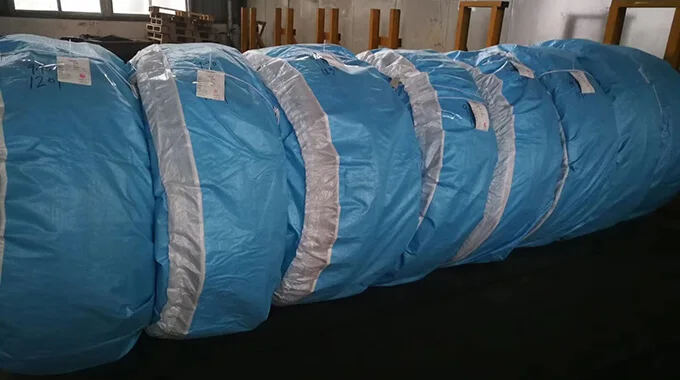
1. Delivery conditions and applicable requirements
Table A.1 – Heat-treatment conditions, product forms and applicable requirements
| Delivery condition | Symbol | Wire rod | Bar | Wire |
|---|---|---|---|---|
| Untreated, as hot rolled | +AR | X | X | — |
| Untreated and peeled | +AR+PE | X | X | — |
| Untreated and cold drawn | +AR+C | — | X | X |
| Untreated, cold drawn and spheroidize annealed | +AR+C+AC | — | X | X |
| Untreated, cold drawn, spheroidize annealed and skin passed | +AR+C+AC+LC | — | X | X |
| Annealed to achieve spheroidal carbides, as treated or peeled | +AC or AC+PE | X | X | — |
| Annealed to achieve spheroidal carbides, then cold drawn | +AC+C | — | X | X |
X = applicable; — = not applicable. Chemical composition is specified in Table A.2 and mechanical properties in Table A.3. Supplementary or special requirements under Annex E apply if agreed at enquiry and order. Other delivery conditions may be agreed at the time of order.
Source: ISO 4954:2018, Table A.1, page 17 (PDF page 23). The original prints “+AC or AC+PE”; the notation is retained as printed. Confirm the exact delivery condition in the order.
2. Chemical composition
Table A.2 – Cast analysis of steels not intended for heat treatment after cold working, mass fraction %
Reference requirements for C4C under ISO 4954:2018. These are not measured heat results; the order standard and requirements for feedstock and finished product must be confirmed separately.
| Steel name | C | Si | Mn | P | S | Cr | Ni | Mo | Alb | Cu | Cr + Ni + Mo |
|---|---|---|---|---|---|---|---|---|---|---|---|
| C4C | 0.02 to 0.06 | 0.10 | 0.25 to 0.40 | 0.020 | 0.025 | 0.30 | 0.30 | 0.10 | 0.020 to 0.060 | 0.30 | 0.50 |
Elements not listed must not be intentionally added to the steel without the purchaser’s agreement, except for finishing the heat. Appropriate precautions are required to prevent additions of elements from scrap or other production materials. Residual elements may nevertheless be present if they do not impair mechanical properties or suitability.
a: Values are maximum limits unless otherwise indicated.
b: Aluminium may be replaced by one or more elements with a similar effect.
c: C10GC, C15GC, C17GC and C20GC may be supplied in two qualities: a) with a maximum aluminium content of 0.015%, or b) without aluminium and with silicon of 0.15 to 0.25% for hot-dip galvanizing.
d: For C2C, C20C, C20GC and C25C, a lower manganese content may be specified with a range of 0.20%.
Source: ISO 4954:2018, Table A.2, page 18 (PDF page 24). Footnote conditions do not transfer automatically to grades absent from their wording. Unspecified limits and blank fields do not mean zero content.
3. Mechanical properties
Table A.3 – Wire rod, bars and wire not intended for heat treatment after cold working
| Steel name | Diameter over, mm | Diameter up to and including, mm | +AR or +AR+PE | +AC or +AC+PE | +AR+C | +AR+C+AC | +AR+C+AC+LC | +AC+C | ||||||
|---|---|---|---|---|---|---|---|---|---|---|---|---|---|---|
| Rm max., MPa | Za min., % | Rm max., MPa | Z min., % | Rm max., MPa | Z min., % | Rm max., MPa | Z min., % | Rm max., MPa | Z min., % | Rm max., MPa | Z min., % | |||
| C4C | 2 | 5 | — | — | — | — | 320 | 77 | 360 | 73 | — | — | ||
| C4C | 5 | 10 | 390 | 70 | 330 | 75 | 470 | 66 | 310 | 77 | 350 | 73 | 410 | 70 |
| C4C | 10 | 40 | 390 | 70 | 330 | 75 | 460 | 66 | 300 | 77 | 350 | 73 | 400 | 70 |
| C4C | 40 | 100 | 390 | 70 | 330 | 75 | — | — | — | — | — | — | — | — |
a: Z values in the first delivery condition (+AR or +AR+PE) are given for information only. Rm is tensile strength and Z is reduction of area at fracture. Blank cells and dashes are retained from the source and do not indicate zero or a supply commitment.
Source: ISO 4954:2018, Table A.3, pages 19–20 (PDF pages 25–26). Values apply only to the specified diameter intervals and delivery conditions.
These excerpts do not replace the complete standard. Annex A concerns steels not intended for heat treatment after cold working; it supplies no hardenability table for this grade.