
On November 12, 2026, the Special Steel subforum of the 2026 Steel Supply Chain Collaboration and Innovation Conference took place at Nanjing International Expo Center. Shanghai Creation Group Co., Ltd. participated as a supporting co-organizer, exchanging views with steelmakers, platform operators and downstream businesses on special steel applications and supply chain collaboration.
Under the theme of connecting special steel supply chains and creating new momentum through intelligent manufacturing, the event was guided by the China Special Steel Enterprises Association, hosted by Ouyeel, and co-organized by Baosteel, Zhongnan and Shanghai Creation Group Co., Ltd. It was held alongside the 2026 Nanjing International Special Steel Industry Exhibition.
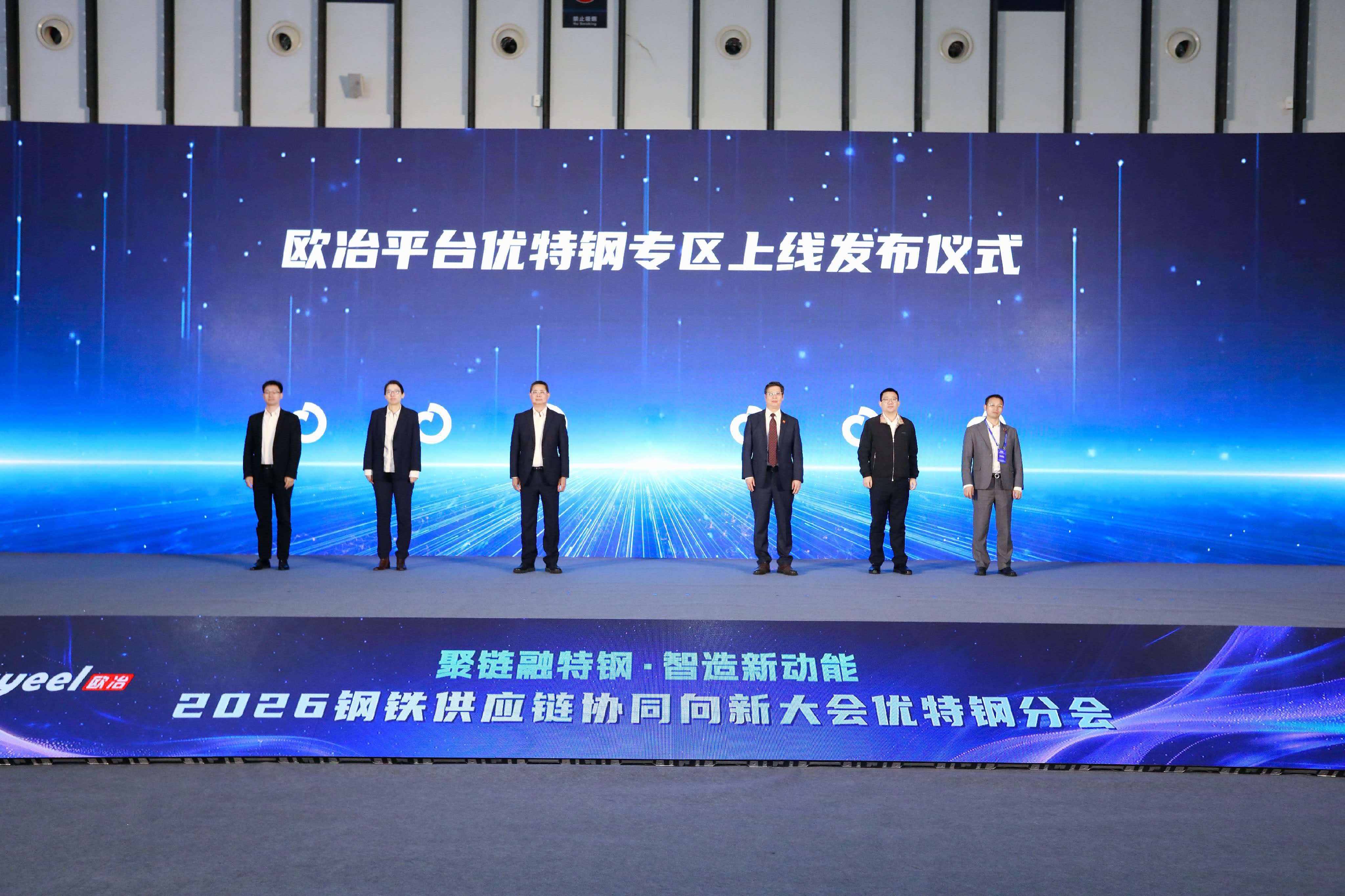
Platform launch connects supply and demand with material applications
Ouyeel officially launched its Special Steel section at the conference. According to China Metallurgical News, the section addresses demand for multiple product varieties, small batches and customization. It brings together steel mill resources, technical coordination, order collaboration, warehousing, processing and logistics to connect material supply with end-user needs.
Growing upward amid economic divergence
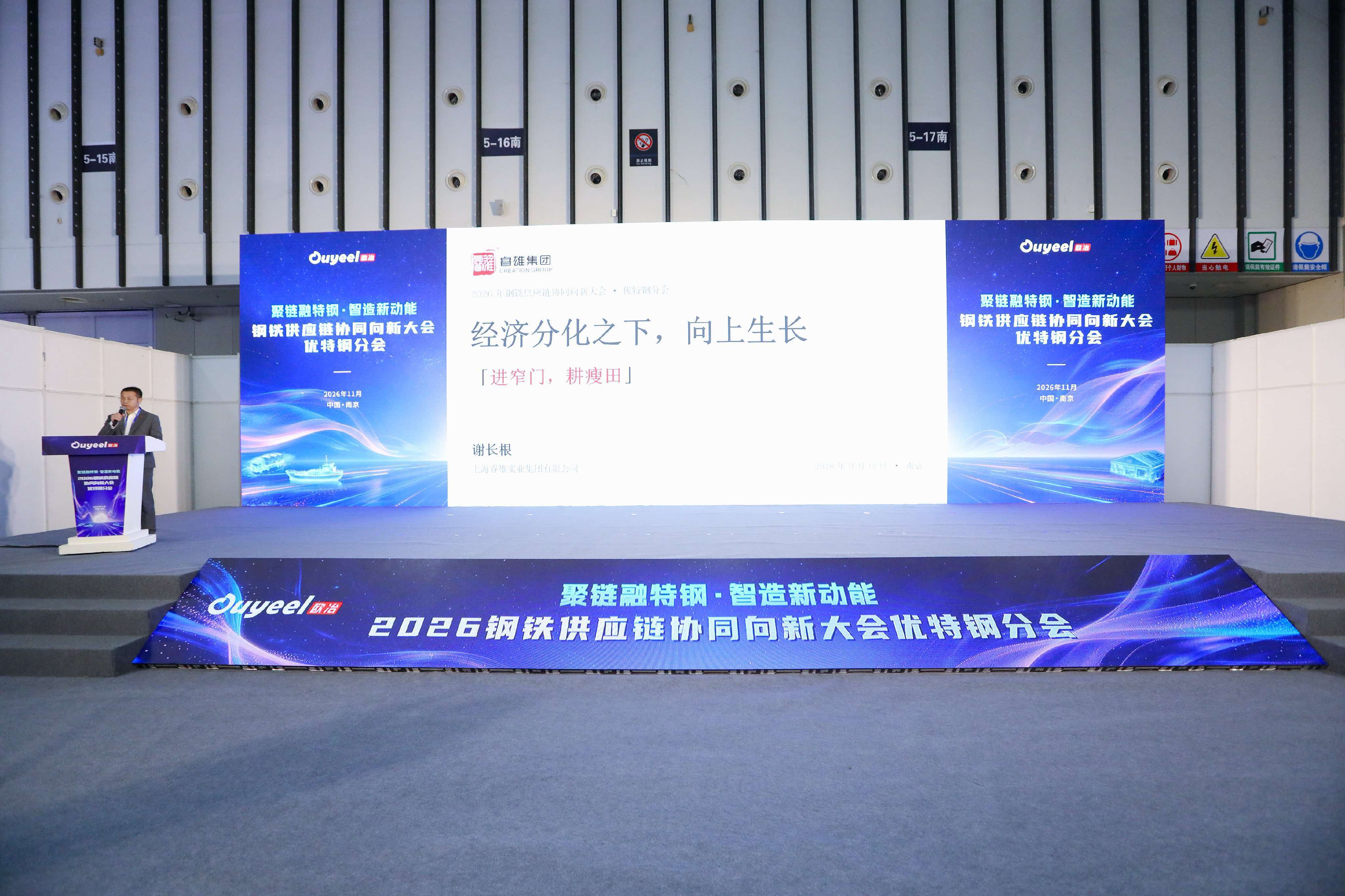
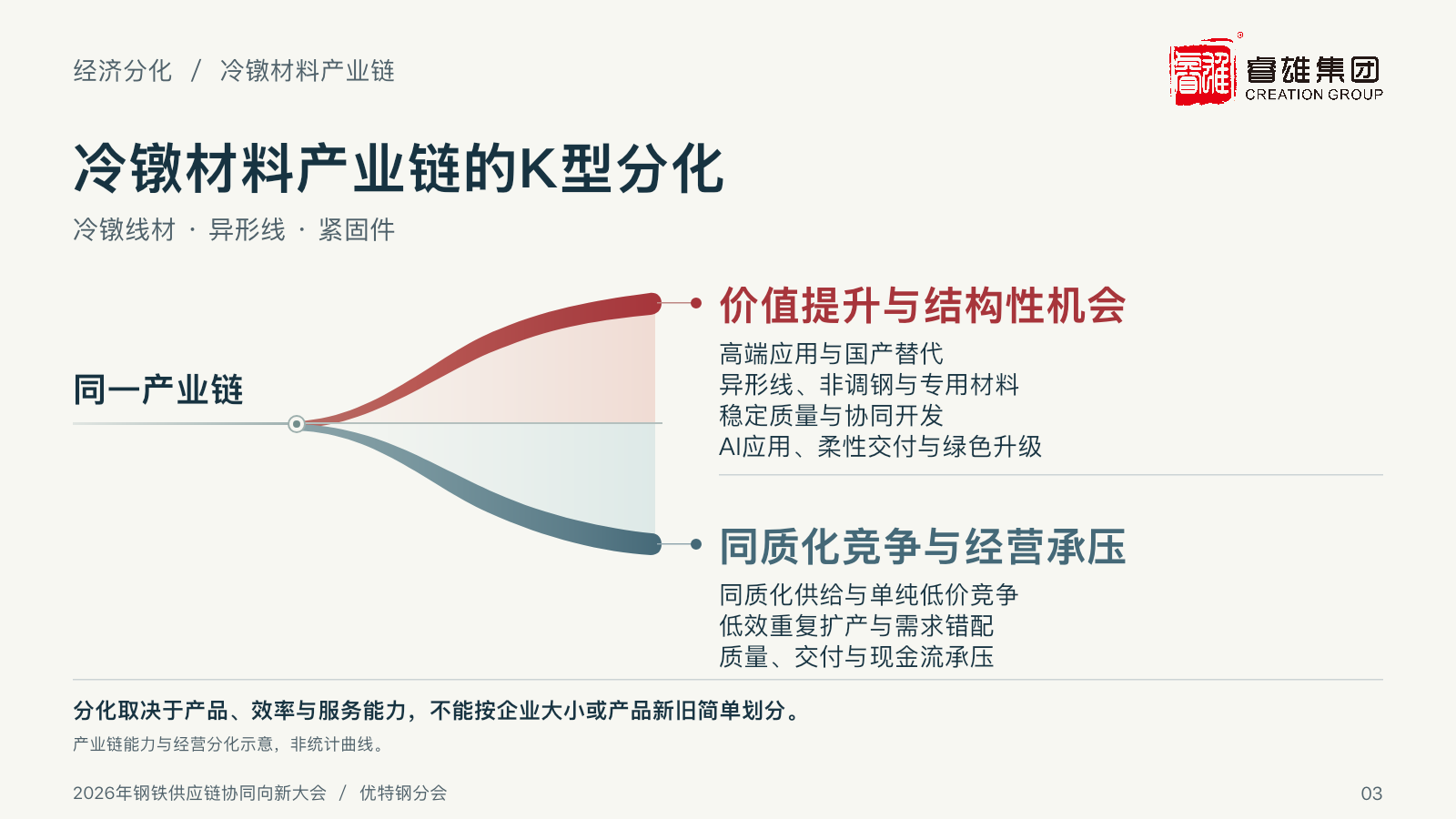
Xie Changgen delivered a presentation titled ‘Growing Upward amid Economic Divergence’. Its central theme, ‘Enter the Narrow Gate, Cultivate the Lean Field’, framed Creation Group’s exploration of materials, processes and digital engineering tools for cold heading wire and shaped wire applications.
The presentation used a conceptual K-shaped supply chain diagram to discuss differences between homogeneous supply, price competition and technical service capabilities. Xie argued for building capabilities around specific customer applications through consistent quality, collaborative development and delivery services. The curves illustrate the presentation’s viewpoint; they are not statistical curves.
Phosphorus-free conversion coatings: exploring customer process needs
The phosphorus-free conversion coating case focused on the connection between coating removal after cold heading and subsequent thread rolling. Development aims include cold heading lubrication, continuous production and finished-part reliability, while examining how changes in surface treatment affect cleaning, handling and energy use.
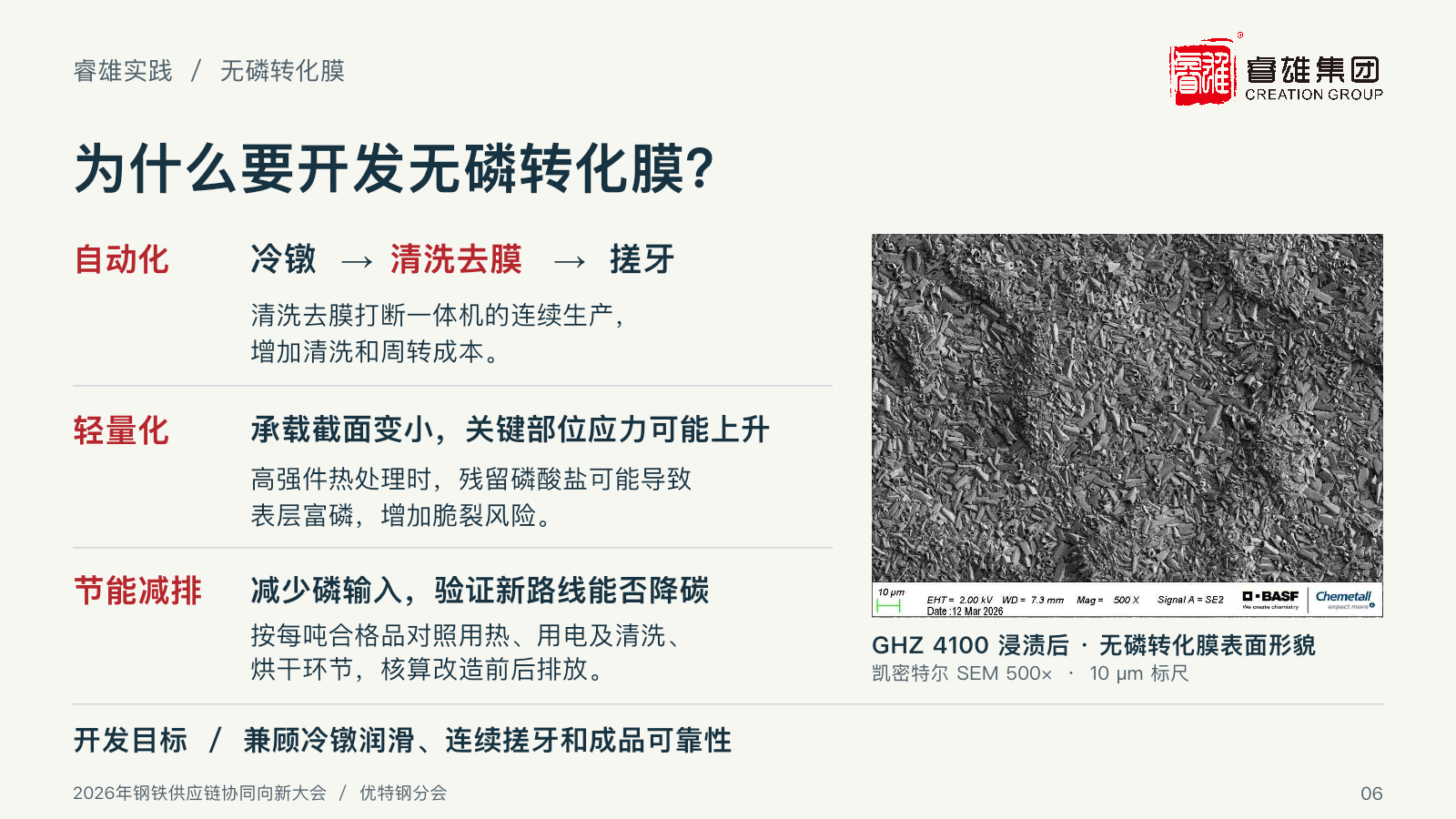
The presentation also showed original surface elemental analysis records for phosphorus-containing and phosphorus-free samples. These results relate to their respective measurement areas. Sample and test conditions have not been confirmed as equivalent, so the results cannot directly establish overall performance differences between the two process routes.
The proposed routes still require checks on customer production lines for lubrication, die wear, thread rolling quality and finished-part behavior after heat treatment. Energy and carbon savings must be assessed using actual energy use per tonne of conforming product and relevant process data. The term ‘phosphorus-free’ does not establish those outcomes.
Shaped wire development: checking drawings, models and samples
The cage support pillar case linked the customer’s 2D drawing with a dimensioned 3D model, preliminary drawing-die geometry and sample cross-sections. Features such as the concave arcs on both sides were used to explain technical discussion around a shared dimensional requirement.
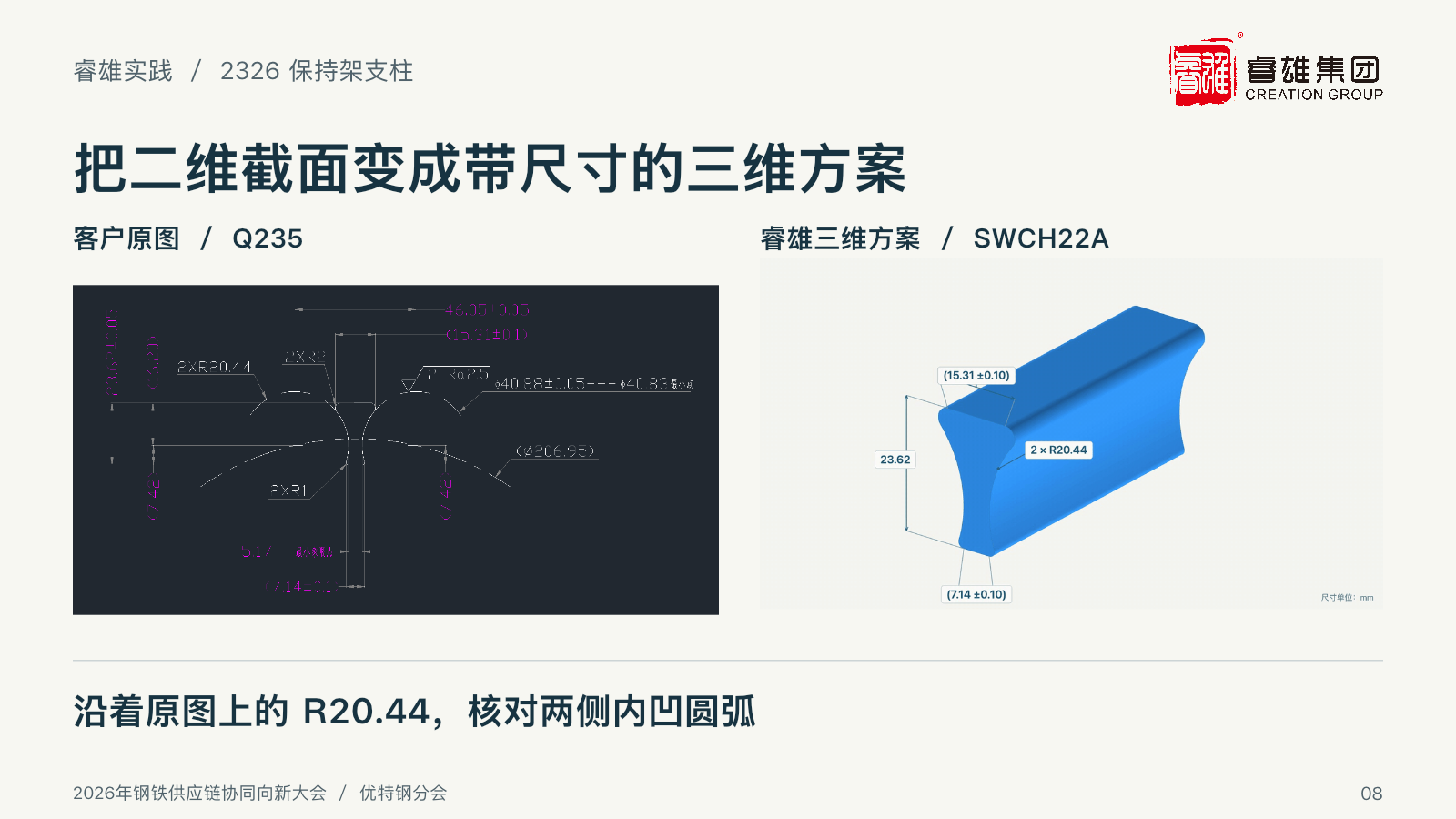
Q235 is the material designation on the customer’s original drawing; SWCH22A is the material shown in the proposed design. This does not establish equivalence, substitution approval or customer acceptance. The five-pass drawing plan is a preliminary geometric design. Local metal flow and actual forming still require further validation.
Across drawings, models, dies and samples, the key is to match contours, measurement locations and drawing revisions item by item, so materials, tooling and production teams discuss the same requirements.
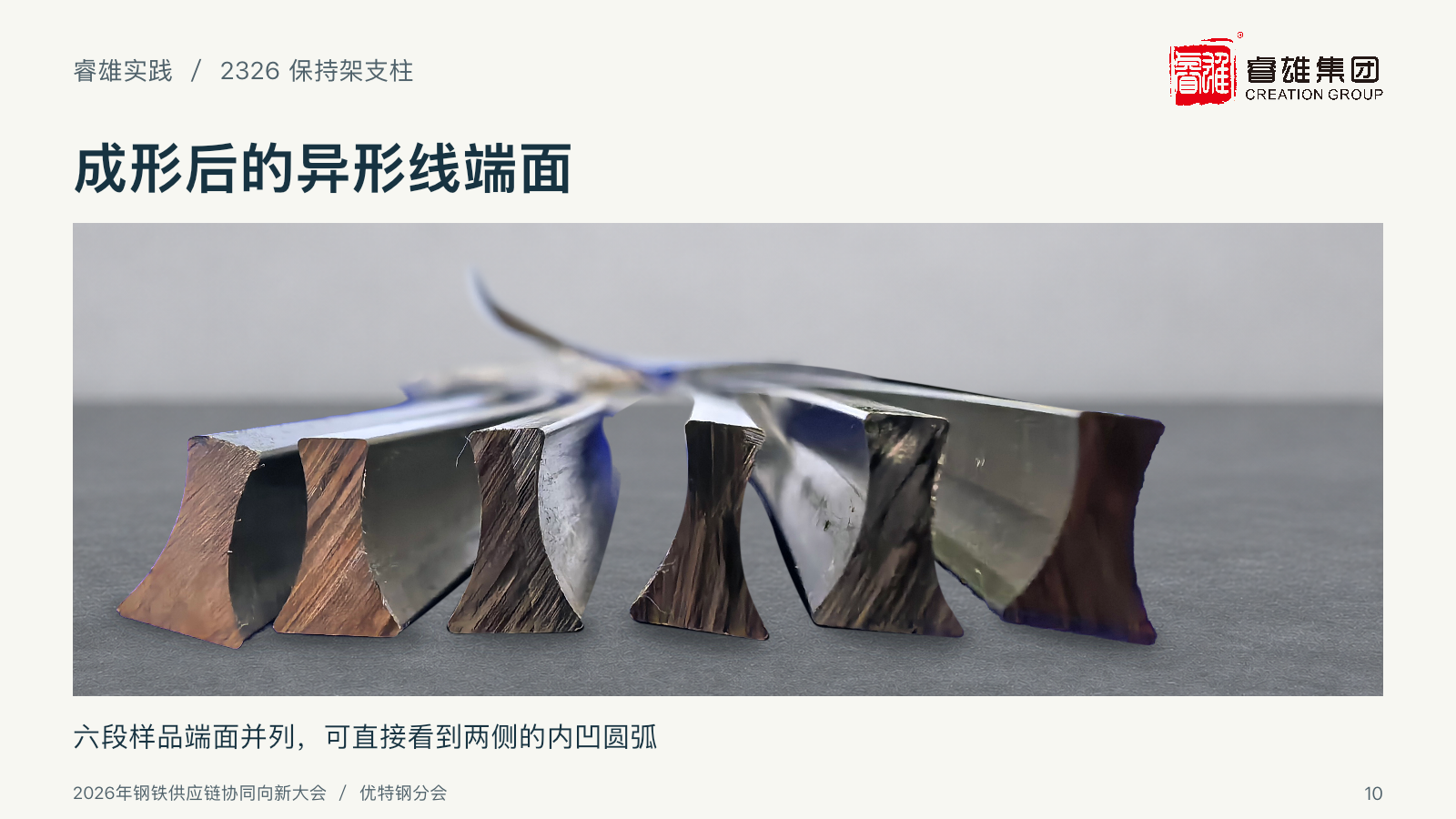
Digital tools support material selection and technical review
The presentation demonstrated approaches to grade lookup, composition-based candidate screening, cross-section modeling and assisted metallographic measurement. Using common drawings, models, standards information and measurement records helps participants express requirements and check differences more clearly.
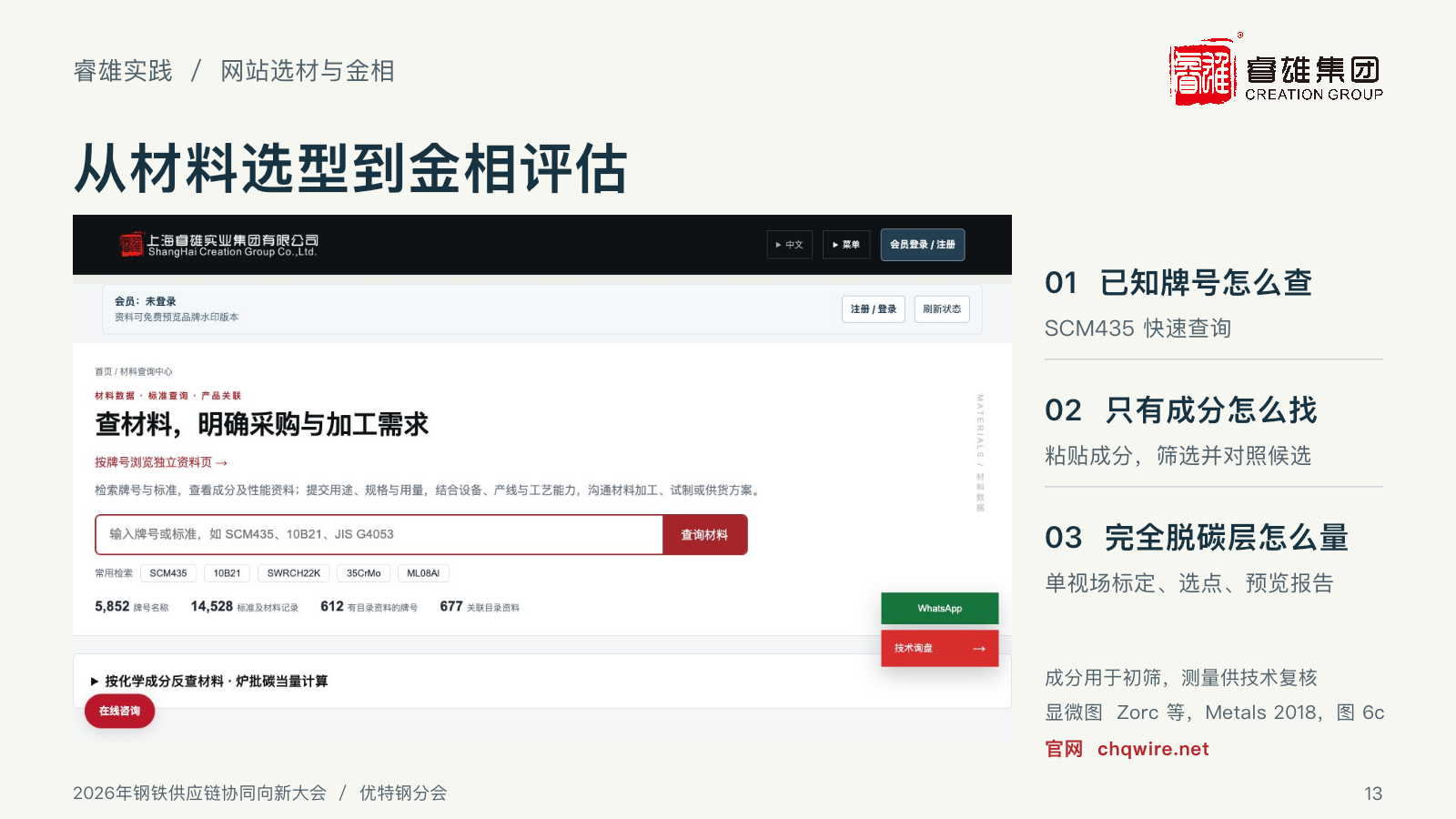
Composition screening establishes a candidate range, while assisted measurements support technical review. Final material selection, performance assessment and process confirmation still require applicable standards, delivery conditions, service conditions, testing and trial results.
Specific needs guide supply chain collaboration
The conference also covered special steel industry development, overseas opportunities, product technology, green and low-carbon topics, and digital supply chain services. China Metallurgical News reported that Creation Group, representing the user side, shared material application technology, technical innovation and lean management practices.
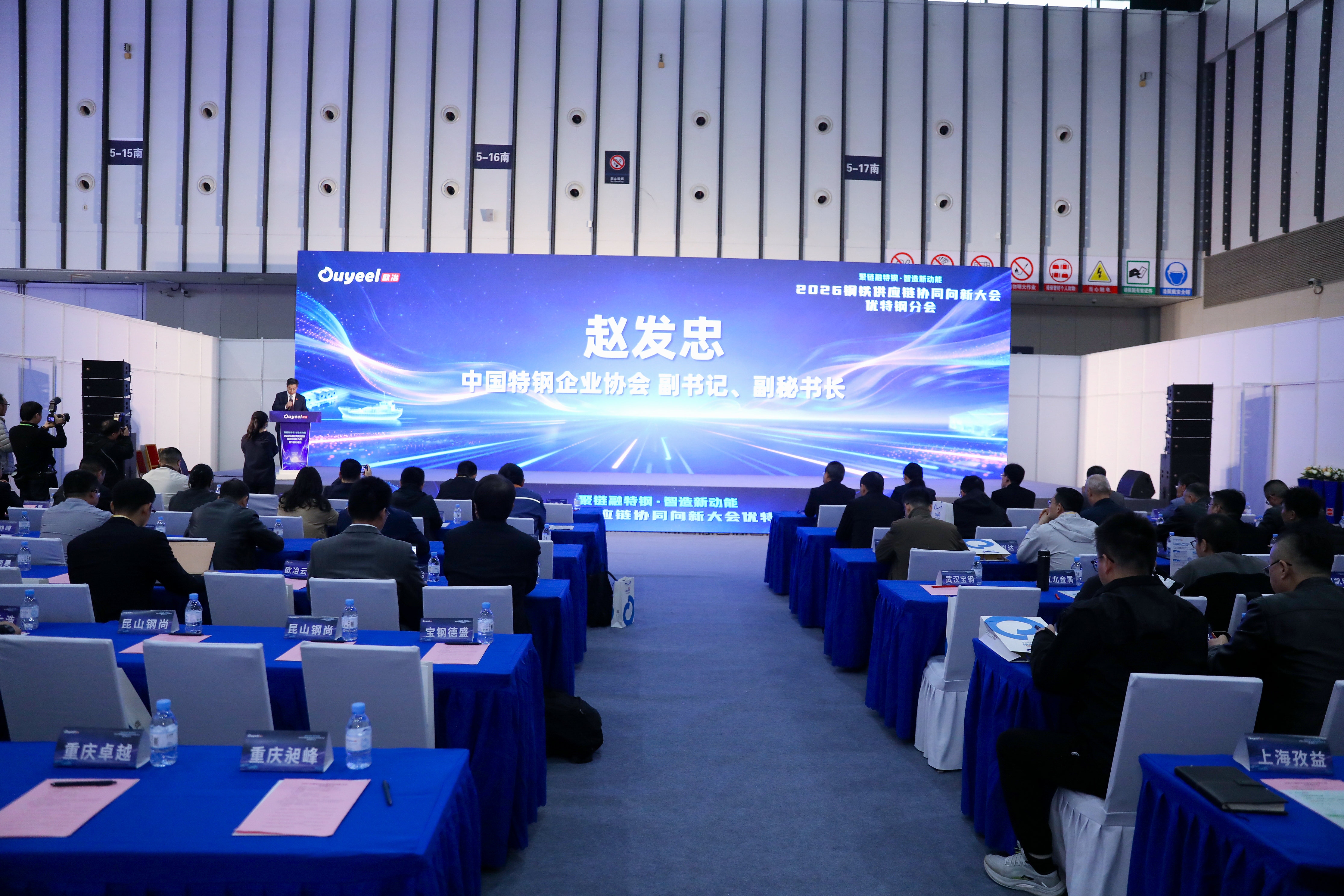
For material processing, ‘Enter the Narrow Gate, Cultivate the Lean Field’ means starting with a drawing, a process challenge and a material requirement. Through Ouyeel’s Special Steel section, Creation Group hopes to strengthen technical cooperation with steelmakers, the platform and end users, bringing application questions into material and process discussions earlier and accumulating experience through specific projects.