
On October 16, 2026, the 2026 Shanghai Derivatives Market Forum’s Steel Sub-Forum was held at the Shanghai Futures Building. Xie Changgen, General Manager of Shanghai Creation Group Co., Ltd., was invited to join the roundtable discussion, where he shared observations and recommendations from a supplier of materials for cold forming on topics such as shifting material demands along the automotive fastener value chain, procurement pricing models, and industrial wire risk management.
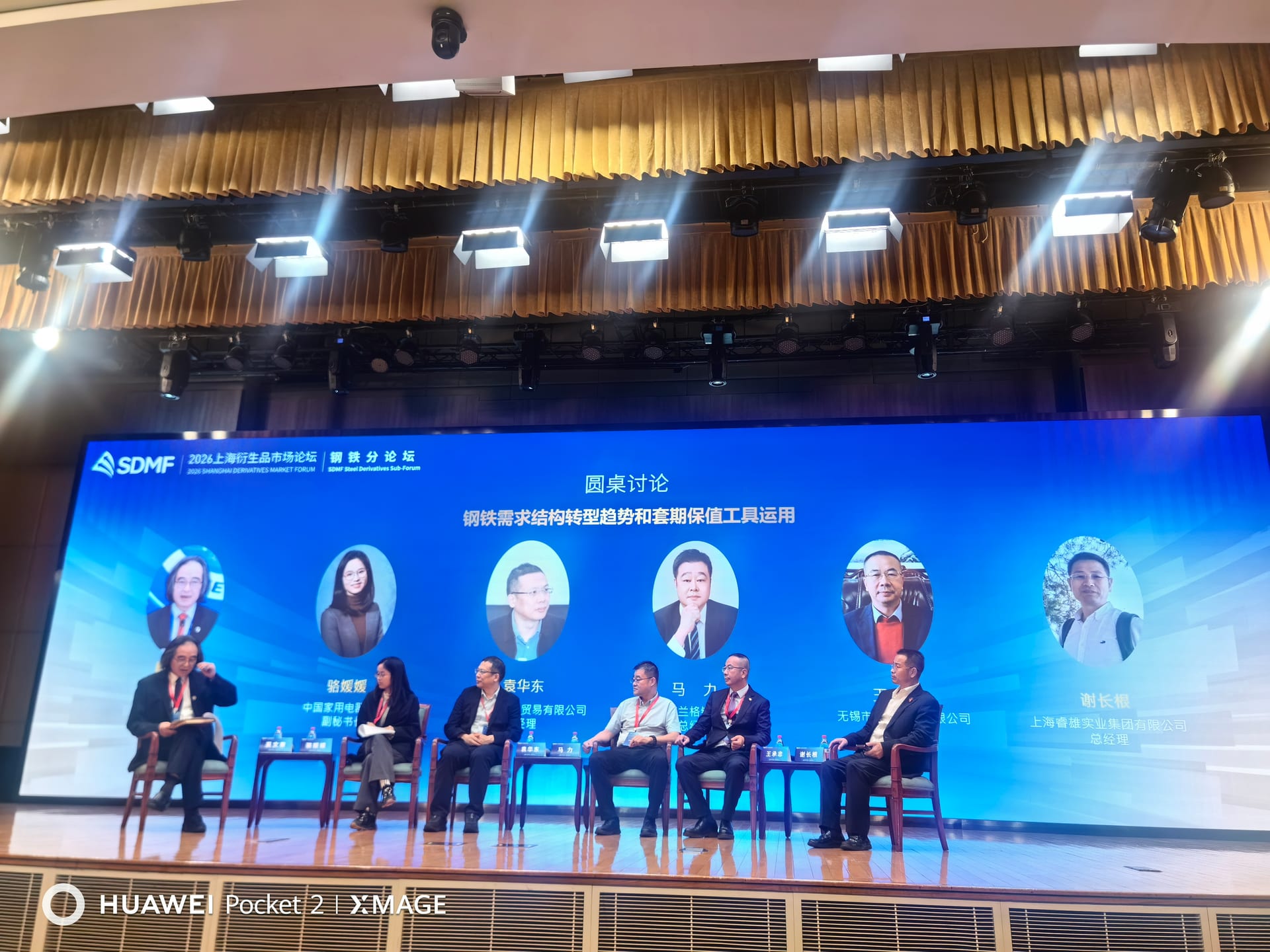
This year’s Shanghai Derivatives Market Forum was co-hosted by the China Financial Futures Exchange and the Shanghai Futures Exchange. The steel sub-forum, themed “Towards Innovation and Excellence: Futures–Spot Synergy,” featured a roundtable focused on “Trends in the Transformation of Steel Demand Structure and the Application of Hedging Tools,” moderated by Wu Wenzhang, founder and chairman of SteelHome, with guests from industry and information services engaging in dialogue.
Focusing on quality stability and formability to meet evolving manufacturing needs
Creation Group has long focused on the R&D and manufacturing of materials for cold heading and cold extrusion, serving both domestic and international automotive and high-end fastener manufacturers. Drawing on its practical experience, Xie Changgen believes that competition in the materials for cold forming market increasingly emphasizes quality stability and technical service capabilities.
The growth of new energy vehicles and the trend toward vehicle lightweighting have placed higher demands on fastener materials in terms of strength, formability, quality consistency, and material utilization. Material suppliers need to develop more targeted solutions based on customers’ component and process requirements. For example, Creation Group is developing profiled wire, tailoring the material cross-section to the shape of the component in order to reduce subsequent machining steps and material waste.
Shifting from unit material price to total manufacturing cost
Regarding procurement and pricing, Xie Changgen noted that these activities still primarily rely on contract prices and periodic negotiations. The automotive supply chain is highly price-sensitive, while the true value of premium materials should be assessed based on forming performance, production stability, and overall manufacturing costs.
Creation Group believes that a supplier’s competitiveness lies not only in the product itself but also in its ability to help customers solve manufacturing challenges. Supporting customer production with consistent material quality and enhancing processing efficiency through tailored material solutions are ongoing priorities for the company.
Bringing risk-management tools closer to the realities of industrial wire rod
On managing price volatility, Xie Changgen shared operational practices such as linking purchase and sales prices, maintaining appropriate inventory levels, and negotiating price adjustment mechanisms with customers.
He pointed out that industrial wire rods come in various grades, specifications, and quality requirements, and the final price of cold-heading materials also includes costs for heat treatment, surface finishing, precision drawing, and other processes. Price movements in construction wire rods do not fully align with those of high-end cold-heading wire rods, so the adaptability of risk-management tools must account for this disparity.
In terms of optimizing wire rod futures, he suggested strengthening research into representative industrial wire rod price indices, basis spreads, and mechanisms for involving industrial enterprises, gradually exploring price benchmarks and risk-management tools that better reflect manufacturers’ procurement and pricing practices.
This exchange provided a platform for Creation Group to engage with stakeholders across the industry chain and with relevant institutions in the futures market. Creation Group will continue to focus on the R&D and manufacturing of materials for cold forming, deepening its product and technical service capabilities by addressing quality stability, material utilization, and customers’ total manufacturing costs.